sound cultures
EDPx3750 / EDPx4750
SOUND CULTURES explores some of the cultures of artists, producers, and listeners that have formed around sound technologies. The class combines reading of critical texts and guided listenings to study several genres of music, sound art and noise, ranging from post-WWII electronic music, field recordings and sound art, to hip-hop, dub, techno, jam bands, and more. Interdisciplinary in critical approach, this class encourages students to listen to these sonic forms as intersections of technological, social, ideological, and imaginative forces. For output, students will produce written media on a variety of sound-related issues, artifacts, and practitioners, culminating in a podcast or interactive publication. Undergraduate Prerequisite: EDPX 2200 and EDPX 2400, or permission of the instructor. Graduate Prerequisite: EDPX 4010 and EDPX 4020, or permission of the instructor. Lab fee. (4.000 Credit hours)
This class fulfills an EDP cultures requirement.
Required Texts
Audio Culture: Readings in Modern Music, eds. Christoph Cox & Daniel Warner (Continuum 2006)
Timothy Taylor, Strange Sounds: Music, Technology and Culture (Routlegde 2001)
Additional Text for Grad Students
Please discuss with the professor at least one additional book from the recommended list included in the graduate syllabus or from your own research bibliography, as long as your selection is generally recognized as an important work in sound studies and be relevant to the final podcast you will produce for the class.
week one / session zero
January 07, 2014
Tuning Up / In: some stories about listening as an artform
session one
January 09, 2014
Readings* Pauline Oliveros, "Some Sound Observations"
* Alex Ross, "The Record Effect: How Technology Has Transformed the Sound of Music"
Listening Exercise #1
This is shared with you through our class Google Drive folder.
week two / session two
January 14, 2014
Video Playlist
"Stockhausen vs. the Technocrats" (plus Björk!)
total time: 1hr 10min
Readings
1. Karlheinz Stockhausen, "Advice To Clever Children..."
2. Björk Meets Karlneinz Stockhausen

Audio Materials
The selections may be found in the shared "Session Two " folder
or in this YouTube playlist (courtesy of Philippe Moore).

Aphex Twin, I Care Because You Do [1995]
Track 01 Acrid Avid Jam Shred
Track 05 Ventolin (Video Version)
Track 10 Alberto Balsalm

Björk, Post [1995]
Track 02 Hyper-Ballad
Track 05 Enjoy
Track 11 Headphones

Daniel Pemberton, Bedroom [1994]
Track 01 Phoenix
Track 02 Basement
Track 10 Voices

PLSTKMN, Sheet One [1993]
Track 01 Drp
Track 02 Plasticity
Track 06 Glob

Scanner, Sulphur [1995]
Track 03 Through Seven Doors
Track 05 Flaneur Electronique
Track 06 Brittle

Karlheinz Stockhausen
Gesang der Jünglinge [1955]
Kontakte (excerpt) [1958]
Zyklus für einen Schlagzeuger [1959]
Hymnen [1969]

Also, you might enjoy this Hymnen Web Project by Oshin Saginian.
session three
January 16, 2014
Readings
"Iara Lee's World Beat" by Michelle Goldberg
MetroActive Movies, from the August 10-23, 1998 issue of the Metropolitan

Video Playlist
Re-Modulations: Pioneering Women of Electronica
total time: 2hrs 17min
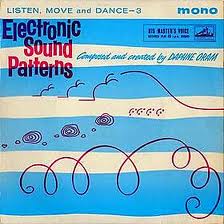
Video Screening (shown in class)
Modulations: Cinema for the Ear (1998) by Iara Lee
total time: 74 minutes

week three / session four
January 21, 2014
Readings
Audio Culture II: Modes of Listening
Ch. 14: Pierre Schaeffer, "Acousmatics"
Ch. 15: Francisco Lopez, "Profound Listening and Environmental Sound Matter"
Ch. 17: Brian Eno, "Ambient Music"
Ch. 18: Iain Chambers, "The Aural Walk"
Ch. 19: Pauline Oliveros, "Some Sound Observations"
Audio Materials
These selections may be found in the shared "Session Four " folder.

Pierre Schaeffer, études e bruits [1948]
Track 01 Etude aux Chemins de Fer
Track 02 Etude aux Tourniquets
Track 03 Etude Violette
Track 04 Etude Noire

Francisco Lopez, La Selva [1997]
Brian Eno
Discreet Music [1975]
Track 01 Discreet Music

Ambient 1: Music For Airports [1978]
Track 01 "1-1"
Track 04 "2-2"

Ambient 4: On Land [1982]
Track 01 Lizard Point
Track 05 Lantern Marsh
Aural Walks

Janet Cardiff, "The Missing Voice (excerpt)" [1999]

Annea Lockwood
A Sound Map of the Hudson River [1989]
Track 02 Feldspar Broom, Mt. Marcy - The Highest Tributary
Track 08 Confluence of Patterson Brook and The Hudson River
A Sound Map of the Danube [2008]
Track 04 Passau to Jochenstein Dam

Hildegard Westerkamp, Into India [2002]
Track 02 Into the Labirinth

Pauline Oliveros
"Bye Bye Butterfly" [1965]
"Alien Bog" [1967]

Deep Listening Band, The Ready Made Boomerang [1991]
Track 01 Balloon Payment
Track 06 CCCC (Cistern Chapel Chance Chants)
session five
January 23, 2014
Listening Exercises #2 & #3
These are shared with you through our class Google Drive folder in the document, "Listening Exercises."
week four / session six
January 28, 2014
Review Blog 1: Sonorous Objects
This assignment is shared with you through our class Google Drive folder in the document, "Review Blog." You will also be invited to our class blog via the email address that you use for the Google Drive.
Readings
Audio Cultures III: Music in the Age of Electronic (Re)production
Ch. 23 John Oswald, "Bettered by the Borrower: The Ethics of Musical Debt"
Ch. 24 Chris Cutler, "Plunderphonia"
Audio Materials
These selections may be found in the "Session Six " folder.

John Cage, "Williams Mix" (1952)

John Cage, "Imaginary Landscapes No. 4" (1951)
WFMU, "New York, NY Radio: The Night John Lennon Died"
William S. Burroughs, "Present Time Exercises" (1971)
James Tenney, "Collage #1 (Blue Suede)" (1961)

John Oswald. 69 Plunderphonics 96 (1988 / 2001)
Track 21 Pretender (Dally Proton)
Track 22 Dont (Vessel Ripley)

Christian Marclay, Records (1997)
Track 02 Jukebox Capriccio

Grandmaster Flash & the Furious Five, The Message (1982)
Track 08 The Adventures of Grandmaster Flash on the Wheels of Steel" (1981)

Malcolm McLaren & the World's Famous Supreme Team, "Buffalo Gals" (1982)
session seven
January 30, 2014
Readings
Strange Sounds I: Theory (Ch. 1-2)
Audio Materials
These selections may be found in the "Session Seven" folder.

Strictly Kev, "Raiding The 20th Century (A History of the Cut-Up)" (2004)
DJ Food, "Raiding the 20th Century (Words & Music Expansion)" (2005)
week five / session eight
February 04, 2014
Readings
Strange Sounds II: Time (Ch. 3-5)
Audio Materials
The two short TOS1_Sonified Science Fiction mixes mash up my own interests in the sound and music of science fiction film soundtracks with Timothy Taylor's interests in space age bachelor pad exotica and spacey ephemera.
The second half of the program does not start automatically, so you will need to do so manually. If the embedded player doesn't show up below or you prefer direct downloads, these may be found here.
The following selections, many referenced in Timothy Taylor's book, may be found in the "Session Eight " folder.

Harry Revel & Les Baxter, Music Out of the Moon [1947]
Track 01 Lunar Rhapsody
Track 02 Moon Moods
Track 04 Celestial Nocturne

Louis & Bebe Barron, Forbidden Planet [1956]
Track 01 Main Titles (Overture)
Track 02 Deceleration
Track 03 Once Around Altaire
Track 04 The Landing
Track 14 The Mind Booster / Creation of Matter
Track 19 Battle with the Invisible Monster
Track 21 The Monster Pursues / Morbius Is Overcome

Bobby Christian, Strings for a Space Age [1959]
Track 02 Out of This World
Track 06 How High The Moon
Track 08 Space Suite 2: Count Down / Flight Into Orbit / Empyreon

Russ Garcia, Fantastica: Music from Outer Space [1959]
Track 01 Into Space
Track 04 Monsters of Jupiter
Track 05 Water Creatures of Astra
Track 07 Red Sands of Mars

Perrey-Kinglsey, The In Sound from Way Out! [1966]
Track 02 The Little Man From Mars
Track 03 Cosmic Ballad
Track 11 Computer In Love

Pierre Henry & Michel Colombier, Les Yper Sound [1967]
Track 01 Psyche Rock
Track 04 Teen Tonic

Stereolab, Mars Audiac Quintet [1994]
Track 01 Tree-Dee Melodie
Track 04 Des Étoiles Electroniques
Track 08 Nihilist Assault Group
Track 10 The Stars Our Destination
Track 13 Outer Accelerator
session nine
February 06, 2014
Technicians of Space lecture
2: The German Space Program
This presentation considers parallel inquiries into human biocomputing, cybernetic engineering, and space exploration conducted by the American space program and the German acid rock scene during the early 1970s. Swapping Werner von Braun and Timothy Leary, as it were, I present the Kosmische Musik phenomena as it reflects research and experiments in biocomputing and cyborg studies, the psychedelic sciences, and interspieces communication in the projects of John Lilly and Ed Mitchell.
week six / session ten
February 11, 2014
Sick day.
session eleven
February 13, 2014
Critical Mashup
This assignment is shared with you through our class Google Drive folder in the document, "Mashup."
Audio Materials
I will introduce these in class; you will need to listen to the "AV Smackdown" and one other podcast before class on Thursday.
WNYC's RadioLab: http://www.radiolab.org/
* “AV Smackdown … The Podcast”
You will also need to pick one of the podcasts from the list below and listen to it in its entirety before our next class session (see Review Blog 2 entry for Thursday):
WNYC's RadioLab: http://www.radiolab.org/
* “Musical Language” (April 21, 2006)
* “Pop Music” (March 21, 2008)
* “Space” (May 12, 2006)
ABC Radio National: “Hearing Voices” (July 22, 2006)
Tone Generation: “Programme 20: Electronics and Voice”
* http://www.ianhelliwell.co.uk/tone-generation.html
Welcome To Mars: “Programme 6: 1953: Other Tongues, Other Flesh”
* http://www.simonsound.co.uk/#/welcome-to-mars/
Sounding Out!: Sound Studies Blog: http://soundstudiesblog.com
* “Episode #6: Spaces of Listening / The Record Shop”
* “Episode #7: Celebrate World Listening Day with the World Listening Project”
Shallow Rewards: https://www.youtube.com/shallowrewards
* “Episode #19: The Hiding”
week seven / session twelve
February 18, 2014
Review Blog 2: Podcasts
This assignment will be shared with you through our class Google Drive folder in the document, "Review Blog."
Readings
Audio Culture III: Music in the Age of Electronic (Re)production
Ch. 22: Brian Eno, "The Studio As Compositional Tool"
Audio Culture VIII: DJ Culture
Ch. 50: Paul D. Miller, "Algorithms: Erasures and the Art of Memory"
Ch. 51: David Toop, "Replicant: On Dub"
Technicians of Space lecture
3. Cognitive Dub Science
This presentation zooms in on "memory" as a particularly important, discrete state of consciousness with powerful parallels in the use of magnetic tape in recording, manipulating and composing sound. Listening to diverse works by Brian Eno, Eno and Fripp, Richard Pinhas, Jamaican dub engineers, William Basinski, Boards of Canada, Tricky, DJ Spooky, and Kode9 + the Spaceape. I consider the relationship of the delay effect and sound recording to the phenomena of death, decay, and disintegration. Informed by the works of Jacques Derrida, I suggest a philosophy of electronic voice phenomena that helps us consider how dreadlocked systems produce sonic intelligences, Others otherwise known as ghosts.
session thirteen
February 20, 2014
The Critical Voice Podcast Proposals
This assignment will be shared with you through our class Google Drive folder in the document, "Podcast."
week eight / session fourteen
February 25, 2014
Technicians of Space lecture
5. Space Rituals
From the Pink Floyd's space rock shows at London's U.F.O. club to Hawkwind's free concerts and the disasters of a Sex Pistols gig, media ritual surrounds these artists. Concentrating on space-related performers ranging from Bowie's Ziggy Stardust, Yes, Tim Blake's Crystal Machine, and Arjen Anthony Lucassen's Star One to Sun Ra and Parliament, I consider the spatial nature of group identity and the practice of collective deep listening and communal trance in relationship to the telematic bodies described by Roy Ascott and Derrida's echographies of television. I'm particularly interested in conflicts between zones of cosmic spiritual identity and electronically mediated presence.
session fifteen
February 27, 2014
No class session.
week nine / session sixteen
March 04, 2014
Podcast Proof workshop, part 1
session seventeen
March 06, 2014
Podcast Proof workshop, part 2
week ten / session eighteen
March 11, 2014
Technicians of Space lecture
6. Contemplative Radio
Throughout the various waves of new age space music we encounter a common concern with sonic environmentalism for the mind. Tuning into the vast, intergalactic communications system that Philip K. Dick names “Radio Free Albemuth,” this presentation explores the dream radios, mood organs and spiritual cyborgs of new age music, with works ranging from Karlheinz Stockhausen and Steve Hillage to Robert Rich, Lustmord, and Meg Bowles. Such space music performs a technological religiosity situating terrestrial experience and mental health within the grand scale of cosmic event, as well as sustaining the belief that the human enterprise is inextricably bound in an impulse to leave the planet Earth behind.
session nineteen
March 13, 2014
Final Presentations
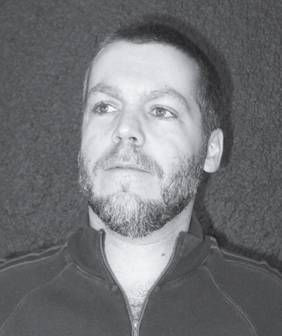 Trace Reddell is a writer, artist and theorist exploring the interactions of sound and the cosmological imagination. Trace's live cinema performances and video works have screened at over thirty international venues including galleries and new media festivals in New York, London, Glasgow, Amsterdam, Berlin, Zurich, Sao Paolo, Seoul, Hong Kong, and Tehran. His net.art and audio projects have appeared regularly on the Web since 1999.